
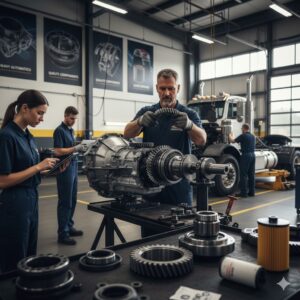
Every heavy vehicle owner reaches that moment when a major component needs attention. The transmission starts showing signs of wear, or routine maintenance reveals parts that need replacing. What happens next often determines whether that vehicle keeps running reliably for years or becomes a constant source of headaches and unexpected costs.
The difference between a heavy vehicle that consistently performs and one that spends too much time in the shop usually comes down to two factors: the quality of replacement parts and the expertise of the people doing the work. These elements work together in ways that aren’t always obvious at first glance.
Why Component Quality Actually Matters
Heavy vehicle transmissions operate under conditions that would destroy standard automotive parts in short order. The constant stress of moving significant weight, the heat generated during operation, and the precision required for smooth shifting all demand components built to higher standards.
When a transmission gets rebuilt or serviced, the parts going into it need to match or exceed the specifications of the original components. This isn’t just about parts that fit—it’s about materials that can handle the thermal cycling, bearings that maintain their tolerances under load, and seals that don’t degrade when exposed to transmission fluid at operating temperatures.
Cheaper alternatives might look identical and even function normally at first. The problems show up later, sometimes just outside a warranty period. A seal that costs half as much but only lasts a third as long doesn’t save money. A bearing manufactured to looser tolerances might work fine until it doesn’t, and then it takes other components with it when it fails.
The Expertise Factor Nobody Talks About Enough
Quality parts need proper installation to deliver their full potential. This is where specialist knowledge becomes valuable in ways that extend far beyond simply following a manual. Experienced technicians working with heavy vehicle transmissions develop an understanding of how these systems actually behave under real-world conditions.
For specialist service and quality components for heavy-duty applications, Heavy Automatics provides solutions designed specifically for the demands these vehicles face. The right combination of parts and expertise can make a significant difference in how long a transmission continues performing reliably.
Take torque specifications, for example. The manual might list a particular value for tightening a bolt, but an experienced technician knows when conditions call for adjustments within acceptable ranges. They recognize when a part that measures within spec still shows signs that suggest it won’t perform optimally. They catch issues during reassembly that less experienced eyes might miss entirely.
This expertise also shows up in diagnostics. Two mechanics might see the same symptoms, but the one with extensive heavy vehicle experience will often identify the actual problem faster and more accurately. They’ve seen how these transmissions fail, what warning signs precede major issues, and which components tend to cause problems under specific operating conditions.
The Hidden Cost of Cutting Corners
Choosing lower-quality parts or less experienced service providers might seem like a reasonable way to control costs initially. The real expense shows up over time, often in ways that aren’t immediately connected to that original decision.
A transmission rebuilt with substandard parts might need another rebuild sooner than expected. Each time a transmission comes apart, there’s labor cost, vehicle downtime, and the risk of additional damage during the process. The cumulative expense of multiple repairs often exceeds what proper parts and service would have cost from the start.
Downtime represents another significant but sometimes underestimated cost. A heavy vehicle that isn’t working isn’t earning money. For commercial operators, every day a truck sits in a shop represents lost revenue that needs to be factored into the true cost of any repair or maintenance decision.
What Proper Maintenance Actually Prevents
Regular, professional maintenance using quality parts does more than just keep vehicles running. It prevents the kind of cascading failures that turn a relatively minor issue into a major rebuild. When transmission fluid stays clean and at the right level, when filters get changed on schedule with proper replacements, and when small problems get addressed before they become big ones, the entire system lasts longer.
Temperature management provides a good example. A transmission cooler that’s partially blocked or a thermostat that’s not functioning properly might seem like minor issues, but they affect the entire transmission. Overheating damages seals, breaks down fluid faster, and accelerates wear on moving parts. A technician who catches this during routine service and replaces a relatively inexpensive component can prevent thousands in damage down the line.
How Operators Can Support Longevity
Even with the best parts and expert service, how a vehicle gets driven matters enormously. Operators who understand their transmissions, who let them warm up properly before putting them under heavy load, and who pay attention to how the vehicle responds make a real difference in component longevity.
Simple habits like avoiding excessive idling, using the appropriate gear for conditions, and reporting unusual noises or behavior promptly help protect the transmission. These practices work best when combined with professional maintenance that uses quality components and benefits from specialist knowledge.
The Long-Term View
Heavy vehicles represent significant investments, and their transmissions are among their most critical and expensive components. Decisions about parts quality and service expertise shouldn’t be made based solely on immediate cost considerations. The vehicles that rack up high mileage while maintaining reliability almost always have maintenance histories that reflect consistent attention to quality.
Operators and fleet managers who prioritize proper parts and experienced service typically see that investment returned through longer component life, fewer unexpected failures, and better overall vehicle performance. The transmission that’s been properly maintained with quality parts doesn’t just last longer—it performs better throughout its service life, with smoother operation and more consistent power delivery.
Making Informed Choices
Understanding what separates adequate service from excellent service helps vehicle owners make better decisions when their heavy vehicles need attention. Asking about parts sourcing, technician experience with heavy vehicle transmissions specifically, and warranty coverage provides useful information. The cheapest quote often isn’t the best value when the full picture gets considered.
Heavy vehicles work hard, and their transmissions handle tremendous stress day after day. Giving them the advantage of quality components installed by people who really understand these systems isn’t just smart maintenance—it’s the foundation for reliability that lasts. When the parts are right and the expertise is there, heavy vehicles keep doing what they’re built to do: moving serious weight, covering serious miles, and earning their keep year after year.
