
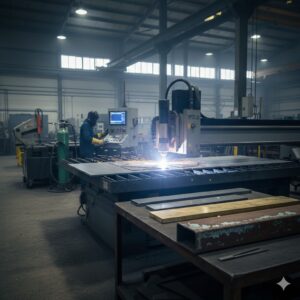
Not every metal cutting project is compatible with conventional means. Thick steel plates, stainless steel, aluminum, all materials that quickly reveal the shortcomings of standard cutting methods. Saw blades fail as they heat up and dull. Oxy-fuel torches don’t work with certain alloys. Mechanical shears fail to provide the thickness or precision required for custom shapes.
All of this, however, is what plasma cutting technology was created to accommodate. Plasma is a gas that becomes electrically charged; heated to such extremes that it melts metal and simultaneously blows it out of the way. No need to punch out workpieces with plasma cutting because the velocity of the gas does that for the user.
Why Conventional Means Fall Short
Mechanical cutting devices function great, until they don’t. Circular saws and band saws manage thin to medium gauge metals without much hassle, but once material gauge exceeds a certain capacity, blade life is an expensive concern. Cutting speed is reduced exponentially and heat produced warps metal or damages workpieces.
Oxy-fuel cutting has been around for more than a century and still exists today, but ultimately has its limitations based on chemistry. It works best with carbon steel because it’s oxidizing, basically high-temperature, controlled rusting. Yet when it comes to stainless steel or aluminum, this process fails. These materials do not oxidize the same as the oxy-fuel chemical reaction; thus, many fabricators will buy plasma cutters to accommodate materials where oxy-fuel technology fails.
Water jet cutting can be incredibly precise but investment in equipment requirements means cutting speed on thick materials can be excruciatingly slow. For high-volume production, water jet does not work because speed is sacrificed even though it provides extreme precision.
What Plasma Does Differently
The physics of plasma cutting suggest why it is so effective on difficult materials. Initially a form of compressed air or inert gas passes through a small nozzle where an electric arc travels through the gas stream. Ultimately, the gas becomes ionized plasma, plasma is a fourth state of matter and reaches temperatures of about 20,000 degrees Celsius.
It cuts because this plasma melts the metal instantly and the velocity with which the plasma pushes the material out of the way prevents slag from building up and making cut width (kerf) anything less than efficient. It works on everything that is electrically conductive metal, not relying on chemical reaction but merely heat and velocity.
Plasma does not care if it’s dealing with aluminum, stainless steel, brass, copper or even mild steel; all metals are ultimately cut through as long as they are electrically conductive. The difference is plasma settings for thickness vs. type of metal; however, in operations where diverse projects are conducted, versatility matters.
The Thickness Advantage
One of the greatest benefits of plasma cutting is thickness. While most handheld plasma units can cut up to one inch of mild steel, industrial plasma systems can manage systems several inches thick without concern.
Speed functions better when the thickness increases as well. A plasma cutter can cut one-inch steel plate at about twenty inches per minute, much faster than mechanical means can attempt. Even if thinner materials are effective with other cutting options, plasma provides more comfort because there is no tool wear. There are no blades to break, no consumables that burn through after a handful of cutting operations (save for inexpensive nozzles and electrodes which last hours upon hours).
Cutting Without Compromise
While speed may benefit operators, cutting faster doesn’t help if quality is compromised. Plasma cutting produces respectable edges, especially for metals under one-inch thick due to its kerf providing less material wastage, which adds up when working with expensive types of metal or providing complex cuts.
Modern CNC plasma tables provide even more precision without human error and complicated shapes that would otherwise be impossible by hand. Therefore, speed and accuracy allows for replication of parts hundreds or thousands of times under production circumstances.
The heat-affected zone, the area beyond the cut which may change material characteristics, is limited with plasma cutting. This matters when quality control processes require specific integrity considerations. While plasma does create heat distortion, most people do not realize how limited this concern is unless compared to other slower thermal solutions that keep the material hot for longer.
When Plasma Is Required
Some jobs are best served with plasma cutting simply because there are no other alternatives. Cutting stainless steel thicker than a quarter inch likely benefits plasma; cutting aluminum when speed is needed without chips everywhere saves on cleanup efforts; plasma handles it seamlessly.
Demolition/salvage work relies heavily on plasma cutting as it’s portable and accommodates whatever it’s cutting through, even painted steel, galvanized metal, rusted metal with scale that would hinder another metal cutting option.
In other words, making an initial investment in equipment may seem prohibitively expensive at first in comparison to basic cutting options; however, all return achieved through completed jobs, materials tackled, and versatility attained makes it worth it in the long run. For any operation frequently performing operations on thick metals, multiple alloys or high-volume productions, it’s not an option, plasma cutting is necessary equipment.
