
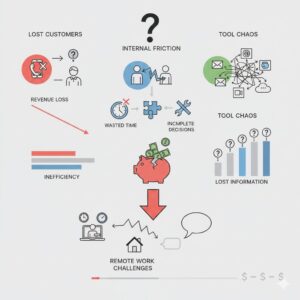
Small businesses bleed money in ways that never make it onto any report. A customer calls, hits voicemail, doesn’t bother leaving a message, and just calls someone else instead. An email thread about something urgent drags on for three days because everyone’s responding whenever they get around to it. Half the people on a conference call can’t hear properly so the whole meeting becomes pointless. None of these feel like disasters when they happen, but they pile up into real costs that most businesses don’t even notice until someone actually sits down and thinks about it.
What makes communication problems so tricky is they don’t wave a flag and announce themselves. They just look like normal business hassle. Customers who don’t seem that interested. Projects that take way longer than they should. Team members who always seem a bit out of the loop. The real issue is usually that information isn’t getting where it needs to go, but because communication happens constantly in so many different ways, figuring out exactly where things are breaking down takes more focus than most busy owners have to spare.
Lost Customers Nobody Knows About
When someone tries to reach a business and can’t get through easily, they typically don’t put in much effort. They might call once, get a busy signal or some confusing automated menu, and that’s it. Or they send an email that sits there for two days while they’ve already moved on and found what they needed somewhere else. Or they reach someone who can’t help them and the transfer to the right person just never happens smoothly.
Every one of these is lost money, but there’s basically no way to track it. The business has no idea about the person who called once and gave up. The inquiry that ended up in spam doesn’t generate any follow-up attempt. The person who got annoyed trying to navigate the phone system doesn’t usually call back to explain why they went with a competitor. These invisible losses keep happening while the business just figures their marketing isn’t working as well as it should.
Current customers deal with similar headaches that slowly damage the relationship. Trying to reach someone about a problem and getting voicemail over and over makes people feel like they don’t matter. Getting bounced between different staff members who each need the whole situation explained again is exhausting. Waiting multiple days for answers to simple questions sends a message that their business isn’t really valued. This stuff doesn’t always make customers leave immediately, but it wears down their loyalty and makes them way more open when competitors come calling.
When Teams Can’t Talk to Each Other
Communication failures between team members slow down everything. Someone needs their manager to approve something but can’t get hold of them for two days. A project sits there stalled because three people are waiting on information from someone who’s been stuck in meetings all week. Important details disappear into massive email chains that nobody has time to read properly.
The wasted time is pretty obvious, people sitting around waiting for answers or tracking down information they need. What’s less obvious is how it affects quality. Decisions get made with incomplete information because gathering all the relevant input takes too long. Work gets done based on guesses that turn out wrong because the clarifying questions never got asked. Mistakes happen because whoever’s doing the work had no idea about a change that got discussed in some conversation they weren’t part of.
These issues get worse in growing businesses where communication needs are expanding faster than the systems keeping up with them. What worked fine when everyone sat in the same room falls apart when people work remotely or across different locations. The informal chat that used to happen naturally needs to be replaced with something more deliberate, but a lot of businesses don’t catch on to this until productivity takes a noticeable hit.
Adding More Tools Just Makes It Messier
Businesses usually try to fix communication problems by throwing more technology at them. Get a new messaging app, add a project management system, try another video meeting platform. The thinking is that better tools automatically mean better communication, but often it just creates more places for information to get lost.
One person sends an important update through email. Someone else uses the messaging app. A third person brings it up in a meeting that not everyone was in. Now the same information exists in three different spots, and different people have different versions of what actually got decided. Trying to find previous conversations turns into detective work, searching through multiple platforms hoping the discussion is somewhere findable.
Having solid business phone systems and working basic communication setup matters way more than collecting extra tools. When phone service actually works right, calls get answered or sent to the right place, voicemail shows up reliably, and conversations happen without technical problems interrupting everything, that creates a foundation for everything else. Piling fancy collaboration software on top of broken basics doesn’t solve anything.
The tool overload creates another problem too, which is people stop keeping track of everything. When communication is spread across five different platforms, important messages get missed just because nobody can possibly monitor all of them. The urgent request sent through the platform someone only checks once a day sits there ignored while they’re actively using a different one.
Nobody Knows Who Does What
Technology gets blamed for a lot of communication problems that are actually about unclear processes. If nobody knows who’s supposed to handle certain types of questions, those questions don’t get answered no matter how great the tools are. If there’s no real system for flagging urgent stuff, urgent things get treated exactly like routine matters and customers end up frustrated.
Small businesses often run without any documented communication processes because they started small enough that everyone just sort of knew how things worked. As the team grows, and especially once people start working remotely, that informal knowledge doesn’t transfer. New people have no idea who to ask about different things, or how fast various messages should get responses, or what channels work for which types of conversations.
This creates wildly inconsistent customer experiences. One person’s email gets answered within an hour because it went to someone who checks constantly. Someone else’s identical email takes three days because it landed with someone who only looks at that inbox every so often. From the customer’s view, the business seems unreliable and all over the place, when really nobody ever actually defined how communication should work.
Information That Should Have Been Shared But Wasn’t
Some breakdowns happen because information that should have gone somewhere just didn’t. Sales promises things to customers that operations has no clue about. Leadership decides to change direction but the announcement doesn’t reach everyone who needs to hear it. Someone quits and walks out with critical knowledge that was never written down or taught to anyone else.
These gaps cause problems that take a while to show up. The customer who got promised something specific receives something else entirely and gets confused or angry. The team member working on a project doesn’t know it’s not a priority anymore and wastes time on something that won’t even get used. The process one person handled smoothly starts breaking because nobody else actually knows how it worked.
Information gets hoarded too, sometimes on purpose but usually just out of habit. Someone becomes the person everyone goes to for certain knowledge and never thinks to document it or teach others. When they’re not around, things bottleneck. When they leave, things fall apart. The business becomes fragile in ways nobody realizes until something breaks.
Too Much Communication Is Also a Problem
Some businesses actually have the opposite issue, which is way too much communication instead of too little. Every tiny decision needs input from multiple people. Every update gets blasted to everyone whether it matters to them or not. Every conversation creates side conversations that create more messages until nobody can figure out what the actual conclusion was.
This creates situations where simple stuff takes forever because the communication overhead is ridiculous. Scheduling one meeting needs a dozen back-and-forth messages. Getting approval for a small purchase generates an email thread that takes longer to read through than the decision should take to make. People get so swamped by the sheer volume of communication that they start tuning most of it out, which means actually important things disappear into the noise.
Usually this comes down to unclear decision authority. When nobody knows who can decide what, everything gets pushed up for group discussion. It feels collaborative but really it’s just slow and inefficient. Clear ownership of different types of decisions would cut communication volume while speeding things up, but figuring that out requires the kind of organizational thinking that gets skipped when small businesses are growing fast.
Remote Work Makes Everything Harder
Remote work and flexible schedules create communication challenges that office businesses with normal hours never dealt with. When everyone’s in the same building nine to five, quick conversations happen naturally and working together in real-time is easy. When people work from different places on different schedules, communication takes actual planning.
The back-and-forth nature of remote work means decisions take longer because everyone needs time to look at things and respond. Quick questions that could have been answered instantly in person now need multiple exchanges that stretch across hours or days. This isn’t necessarily terrible, but it needs different processes than what worked when everyone was in the same room.
Time zones make it even messier. A question sent at end of day in one place sits there overnight while it’s already the weekend somewhere else. Scheduling meetings that work for everyone becomes a puzzle when there’s barely any overlap in working hours. Real-time collaboration that some tasks genuinely require becomes a logistical headache.
Actually Fixing Communication
Making communication better doesn’t happen through one magic solution. It needs looking at tools, processes, and how people actually interact, all together. Are the basic tools reliable enough that people can count on them? Are there clear processes for how different information should move around? Do people feel okay communicating openly or is there awkwardness that makes them avoid certain conversations?
Most businesses discover they’ve got multiple things contributing to communication problems. The phone system drops calls sometimes but not enough to feel urgent about fixing. Email response expectations are fuzzy so different people work on completely different timelines. The team chat has useful information but searching through it is such a pain that knowledge effectively vanishes. Remote workers feel left out compared to people in the office.
Tackling these means picking based on what’s causing the biggest damage rather than trying to fix everything simultaneously. What communication breakdown is costing the most money or causing the worst customer issues? Start there, actually fix it properly, then move to the next thing. Trying to overhaul everything at once usually means nothing gets done right.
The point isn’t achieving perfect communication, which doesn’t exist in any business anyway. The point is making sure critical information flows reliably, customers can reach the business when they need to, team members can get the input required to do their jobs, and important decisions happen in reasonable timeframes. Getting those basics right prevents most of the expensive problems that communication breakdowns cause.
