
Key Takeaways
- A vehicle’s purchase price is only one part of its total ownership cost.
- Insurance, fuel, maintenance, repairs, registration, and depreciation all affect the monthly budget.
- Comparing total costs can be more useful than comparing payments alone.
- Routine service and a repair reserve can reduce financial surprises.
- A trade-in decision should consider reliability, repair outlook, loan balance, and current value.
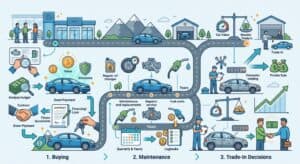
Planning for car ownership involves more than just considering the initial payment. Whether you’re replacing an old vehicle, buying your first car, or sticking with your current one, the ideal choice is the one that aligns with your household budget in the long run. For additional guidance on vehicle shopping, learn more about options that may fit your transportation needs.
A realistic plan accounts for predictable costs, such as insurance and fuel, as well as less frequent expenses like tires, brakes, repairs, and registration. Building those costs into the decision before buying can help drivers avoid stretching their budgets after the excitement of a purchase wears off.
What Car Ownership Really Costs
Total cost of ownership includes the purchase price, down payment, loan interest, taxes, insurance, fuel or charging, maintenance, repairs, tires, parking, tolls, registration, and depreciation. Depreciation is easy to overlook because it is not a monthly bill, but it matters when it is time to sell or trade in the vehicle.
Start by separating fixed costs from variable ones. Loan payments and insurance premiums are usually predictable, while fuel use, repairs, and tire wear vary with mileage, driving conditions, and vehicle age. This simple distinction makes it easier to see where your budget has flexibility and where it does not.
How to Build a Realistic Car Budget
Use your actual household income, savings goals, rent or mortgage, debt payments, and essential expenses to set a transportation limit. Do not begin with the maximum payment a lender might approve. Instead, decide what total monthly vehicle cost leaves room for savings and unexpected needs.
Suggested Budget Steps
- Estimate the expected payment, including taxes and fees.
- Request insurance quotes for the exact vehicles under consideration.
- Estimate monthly fuel or charging costs from your usual mileage.
- Set aside a monthly amount for maintenance and repairs.
- Add parking, tolls, registration, inspections, and seasonal expenses.
For example, two vehicles may each have a $450 payment, yet one could cost substantially more because it needs premium fuel, has higher insurance rates, or requires expensive tires. The lower sticker price is not always the lower-cost choice.
Comparing New, Used, and Certified Vehicles
New vehicles can offer current safety features, full warranty coverage, and less immediate concern about wear. The tradeoff is often a higher purchase price and faster depreciation during the first years of ownership.
Used vehicles may provide more choices at a lower upfront price, but condition matters as much as age. Review vehicle-history information, maintenance records, mileage, tire condition, brake wear, and any signs that major service may be approaching. A pre-purchase inspection can be especially valuable for an older vehicle.
Certified pre-owned vehicles can sit between these choices. They may include inspections and limited added coverage, but buyers should still compare the final price, deductible terms, remaining factory warranty, and likely operating expenses.
Looking Beyond the Monthly Payment
A lower payment can result from a longer loan, not necessarily a better deal. Review the amount financed, annual percentage rate, loan term, total interest, down payment, trade-in credit, taxes, fees, and optional products before signing. Federal disclosures explain the APR, finance charge, and payment terms that make up the full cost of an auto loan.
Consider a $30,000 loan at the same rate over 48 months and 72 months. The 72-month option can reduce the monthly bill, but it generally increases total interest and keeps you in debt longer. If the vehicle loses value faster than the balance falls, you may have negative equity when it is time to trade.
Planning for Maintenance and Repairs
Maintenance is more manageable when you follow the owner’s manual schedule and track completed work. Important items include oil and filter changes, tire rotation, brake inspections, battery testing, fluid checks, air filters, alignments, and seasonal inspections.
Repairs are less predictable, which is why a reserve fund matters. Even a modest automatic transfer each month can soften the impact of a battery, brake, suspension, or cooling-system repair. Keep digital service records and ask for a clear explanation of recommended work before approving it.
Reducing Fuel, Insurance, and Daily Driving Costs
Small habits can lower operating costs without requiring a different vehicle. Compare insurance quotes at renewal, combine errands, remove unnecessary cargo, use the fuel grade specified by the manufacturer, and keep tires inflated to the recommended cold pressure.
Before choosing between vehicles, use a tool that lets you compare fuel costs based on annual mileage and local prices. This is particularly useful when comparing a gasoline vehicle with a hybrid, plug-in hybrid, or electric vehicle, since the best fit depends on driving distance, access to charging, and electricity rates.
When to Consider a Trade-In
Mileage alone should not determine whether to replace a vehicle. Ask whether repairs are becoming frequent, whether reliability still meets daily needs, whether a major repair would provide several more useful years, and whether the current loan balance exceeds the vehicle’s value.
An older vehicle that needs a $1,200 repair may still be the economical choice if it is otherwise reliable and has no payments. In contrast, replacement may make sense when repeated repairs, poor reliability, safety concerns, and declining value occur simultaneously. Compare the repair outlook with the full cost of replacement, not just the next monthly payment.
A Simple Ownership Planning Checklist
- Set a total monthly transportation budget.
- Estimate insurance before selecting a vehicle.
- Compare fuel or charging costs using your real driving habits.
- Review warranty coverage, service records, and vehicle condition.
- Calculate total loan cost, not only the monthly payment.
- Plan for tires, brakes, maintenance, and unexpected repairs.
- Compare the trade-in value with the remaining loan balance.
- Review the budget every six months or after a major life change.
Common Questions About Car Ownership Costs
What is the most common budgeting mistake?
Focusing only on the payment. Insurance, fuel, maintenance, repairs, and depreciation can make a seemingly affordable vehicle difficult to manage.
Is a used vehicle always cheaper to own?
No. A used vehicle may cost less upfront, but its repair history, fuel economy, insurance, condition, and upcoming service can affect the overall cost.
How much should drivers save for repairs?
The right amount depends on the vehicle’s age, mileage, reliability, and your need for dependable transportation. A consistent monthly contribution is often easier than reacting to a large bill.
Should a vehicle be replaced before a major repair?
Not automatically. Compare the repair cost with the vehicle’s value, expected future reliability, safety needs, and the cost of taking on another loan.
Final Thoughts
Smart car ownership involves aligning a vehicle with genuine needs and financial constraints. Establishing a clear budget, thoroughly reviewing financing options, maintaining the vehicle regularly, and honestly assessing trade-in value can help minimize unexpected issues during ownership and afterward.
