
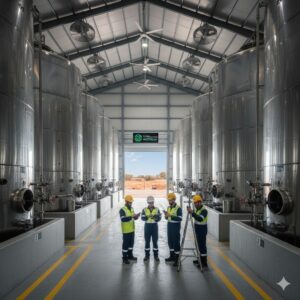
In Australia’s agriculture, mining, chemical, brewing, and winemaking sectors, liquid storage is a vital but often overlooked part of operations. Failures in storage systems can lead to costly downtime, environmental harm, and safety breaches—most of which are avoidable with proper planning and oversight.
To prevent such issues, it’s essential to choose the right containers, maintain them properly, manage environmental exposure, and rely on experienced providers who understand your industry’s unique requirements.
Choose Containers That Match the Stored Liquid
A major cause of storage failure is using a container that’s chemically incompatible with the stored liquid. Plastics can degrade under UV light or react with aggressive chemicals, while some stainless steels corrode when exposed to specific substances. The wrong match compromises structural integrity and shortens container life.
Container selection should always begin with a chemical compatibility assessment. This includes not just the tank body but also gaskets, valves, and seals. Relying on cost or availability without this check introduces long-term risk and increases the likelihood of leaks or breakdowns.
Work With Industry-Specific Experts
Another vital step in avoiding storage failures is seeking guidance from experts who understand the specific demands of your industry. The needs of a chemical facility differ significantly from those of a vineyard or mining site, and general advice often falls short of addressing these differences.
Industry providers, including specialists such as Tank Management Australia liquid storage specialists, can offer insight drawn from working across a range of liquid-handling environments. Their experience helps businesses evaluate suitable container options, identify effective containment approaches, and shape maintenance practices in line with real operational challenges.
Don’t Overlook Secondary Containment
Even with the right containers, leaks can still occur. That’s why bunding, secondary containment that captures spills, is critical. Poorly sized or damaged bunds are common points of failure, especially where hazardous or high-volume liquids are involved.
Bunds must be matched to container volume and built from compatible materials. Regular inspection is essential to keep them fit for purpose. Ignoring containment systems not only risks spills but can also lead to environmental fines and operational delays.
Make an Inspection and Maintenance Routine
Over time, containers degrade due to UV exposure, chemical stress, and regular handling. Cracks, corrosion, and warped fittings often go unnoticed until a major failure occurs. A consistent inspection routine prevents these issues from escalating.
Scheduled maintenance should include visual checks, pressure testing where needed, and logging of wear patterns. This allows for timely repairs or replacements and supports compliance with safety regulations. Skipping maintenance is a gamble that rarely pays off.
Eliminate Preventable Errors Through Training
Human error causes many avoidable storage failures. Overfilling, mishandling, or incorrect stacking can compromise even the most robust containers. These issues often stem from a lack of awareness or training—something that can be addressed through structured instruction and clear operational procedures.
Staff should be properly trained in liquid handling, storage protocols, and emergency spill response. In Australia, the accredited unit AHCCHM304A Transport, Handle and Store Chemicals offers guidance on safe chemical storage practices, including bunding and containment. Programs like this help ensure teams are not only compliant but confident in maintaining safe and effective storage systems.
Address Environmental Conditions
Outdoor storage introduces risks that many operations underestimate. Heat can degrade plastics and raise pressure inside sealed containers, while cold temperatures may cause liquids to contract or freeze, damaging seals and structure.
The solution lies in choosing containers suited to the climate, stainless steel performs better in extreme conditions, and in positioning them out of direct sunlight or freezing zones. Environmental stress isn’t passive; it’s a constant factor in container performance.
Closing the Gaps in Liquid Storage Safety
Liquid storage failures are rarely sudden—they build over time through poor choices, oversight, or neglect. With compatible materials, secondary containment, regular maintenance, trained staff, and expert guidance, these failures can be largely avoided. Doing it right from the start protects both operations and the environment.
