
Key Takeaways
- A great view is valuable, but it should not outweigh the need for access, systems, insurance, and maintenance.
- Compare every property for winter driving, heating, water, drainage, internet service, and ongoing ownership costs.
- Private roads, steep driveways, septic systems, propane delivery, and snow removal can change the practical cost of ownership.
- Review insurance availability, flood exposure, radon, and wildfire-related planning before contract deadlines approach.
- The strongest choice is the home that works for your budget and routine in every season.
Buying in Vail means comparing much more than views, finishes, and proximity to the lifts. Buyers reviewing Vail CO homes for sale through Matthew Blake can use a Vail-focused page that combines searchable property listings with neighborhood information. Matthew Blake’s coverage of Vail, Beaver Creek, Avon, Edwards, EagleVail, and Wolcott can also help buyers place one home within the broader Vail Valley lifestyle and travel pattern.
A mountain home can be a full-time residence, a seasonal retreat, or a rental-oriented second property, but each use creates different needs. A condo near Vail Village may prioritize walkability and association services, while a single-family home farther from town may require more attention to roads, snow storage, utilities, drainage, and emergency access.
Why Vail Mountain Homes Require a Different Comparison
Vail’s alpine setting is a major part of its appeal, but terrain and weather shape daily living. A route that feels easy on a clear summer afternoon can be very different during a snowstorm, freeze-thaw cycle, or spring runoff. Sun exposure also matters. A sunny driveway may melt more quickly, while a shaded area can hold snow and ice longer.
Buyers should distinguish between a vacation home and a primary residence early. A second-home owner may accept a longer drive or a smaller storage area in exchange for location. A full-time resident may place greater weight on grocery access, medical services, workspace, parking, school routes, and utility reliability.
Start With the Buyer’s Main Goal
- Define the use: Decide whether the property is for full-time living, seasonal use, family visits, or rental use where permitted.
- Estimate occupancy: Consider how often the home will sit vacant and who will monitor it during cold weather.
- List practical must-haves: Garage space, ski storage, a mudroom, a home office, guest parking, and trail access can matter more than cosmetic upgrades.
- Create a complete budget: Include taxes, insurance, utilities, association dues, snow removal, repairs, and reserve funds.
Compare Location Beyond the View
Compare actual travel times to grocery stores, health care, schools, the Eagle County Regional Airport, work, and preferred recreation. Visit at the times you would normally drive, not only during an open house. Note whether the home is near a creek, below a slope, beside a busy frontage road, or reached by a narrow lane.
Privacy and convenience are both legitimate priorities, but they are not the same. A home close to Vail Village or Lionshead may simplify dining, shopping, and skiing. A more secluded Vail Valley property may offer space and quiet, while requiring more planning for deliveries, guests, maintenance calls, and winter travel.
Review Roads, Driveways, and Winter Access
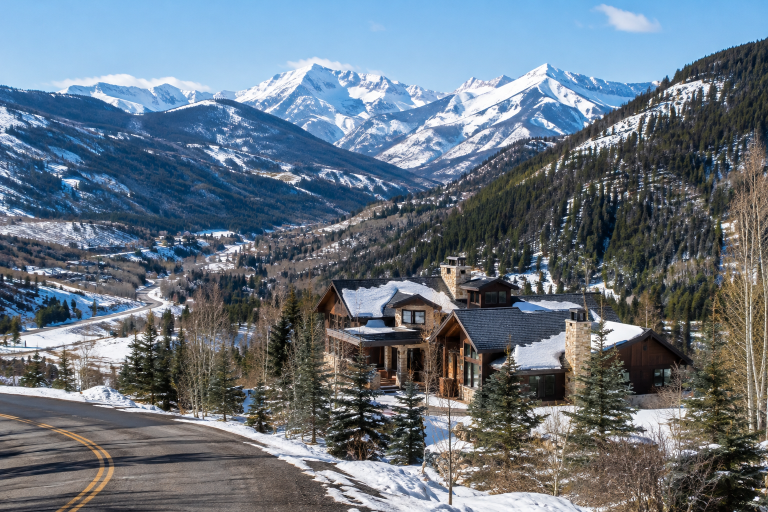
Ask whether the road is public, privately maintained, or managed through an association. Request documents covering shared road obligations, easements, plowing, sanding, and cost allocation. A steep driveway, tight turnaround, or limited snow-storage area can affect daily use even when the house itself is in excellent condition.
- Confirm that emergency, delivery, and service vehicles can reasonably reach the home.
- Ask who plows the driveway and when service is typically provided.
- Look for safe guest parking and adequate room to turn around.
- Review whether winter tires, all-wheel drive, or four-wheel drive would be practical requirements for your routine.
Check Water, Sewer, Heating, and Backup Systems
Mountain properties can rely on public utilities, private wells, septic systems, propane, electric service, wood-burning appliances, or some combination. Request recent records for applicable well and septic systems, then review the age and service history of boilers, furnaces, water heaters, fireplaces, and generators.
Ask how the house is protected during vacancy. Pipe-freeze prevention, monitored thermostats, shutoff valves, generator capacity, and fuel delivery arrangements are practical considerations. If a system is near the end of its expected service life or has incomplete records, price a realistic replacement scenario rather than assuming it will be trouble-free.
Look Closely at Roofs, Drainage, and Slopes
Roofs and site drainage deserve a careful inspection in mountain settings. Review the roof’s age, material, flashing, gutters, ventilation, and visible signs of ice-dam damage. On the lot, observe where rain, snowmelt, and spring runoff travel. Retaining walls, culverts, swales, and drainage channels should be evaluated for condition and maintenance needs.
Pay attention to moisture marks, foundation cracks, erosion, roof sagging, and grading that directs water toward the home. Ask whether prior drainage, roof, or structural work was completed by qualified professionals, and retain documentation with the property records.
Price Insurance and Environmental Risks Early
Insurance belongs in the initial comparison process, not at the end. Obtain property-specific quotes early and ask about deductibles, exclusions, prior claims, wildfire-related requirements, and separate flood coverage. Homes near waterways or low points should receive extra attention. The flood insurance policy checklist for homeowners is useful for questions about elevation documentation, utilities, and flood coverage because standard homeowners policies generally do not cover flood damage.
Also review defensible-space expectations, evacuation routes, and local maintenance obligations. Insurance availability and cost can influence the true affordability of a home just as much as a monthly utility estimate.
Do Not Skip Radon, Internet, and HOA Review
Radon testing is worth including, particularly when a home has a basement, crawl space, or other ground-contact area. The EPA advises buyers and sellers to test homes for radon and recommends fixing homes with radon levels at or above 4 pCi/L. Use the EPA’s guidance for homebuyers considering radon testing to understand testing records, mitigation systems, and follow-up questions.
For remote work, verify internet availability at the exact address and test cell service in key rooms and outside areas. Finally, read HOA documents in full. Confirm dues, planned assessments, rental restrictions, pet rules, parking rules, exterior-change limits, and whether roads, landscaping, snow removal, or amenities are included.
A Simple Five-Step Comparison Method
- Shortlist the location: Compare access, services, privacy, and seasonal driving conditions.
- Review core systems: Evaluate heating, water, sewer, roof, drainage, and backup power.
- Calculate hidden costs: Include insurance, utilities, road care, snow removal, repairs, and association fees.
- Order targeted inspections: Add radon, well, septic, roof, drainage, or structural review when appropriate.
- Test the lifestyle: Drive the route, visit at different times, and picture the property during the conditions that will matter most.
Common Questions Buyers Ask
Is a mountain home more expensive to maintain?
It can be, depending on age, weather exposure, site conditions, road access, and the home’s systems. Snow management, exterior upkeep, heating demand, and remote service calls should all be part of the ownership plan.
Should buyers choose town or a more private location?
Choose based on routine. Town access can support convenience and walkability, while a more private setting can offer space and quiet. Neither is automatically better without considering how the property will be used.
What is the most common oversight?
Buyers can become focused on scenery before confirming access, heating, water, insurance, drainage, internet, and property rules. A disciplined comparison prevents a beautiful first impression from hiding a difficult long-term fit.
Conclusion: Compare the Whole Property
The right Vail-area home is not simply the one with the best view or newest finishes. It is the property that aligns with your daily needs, seasonal plans, and full ownership budget. By comparing location, access, systems, insurance, maintenance, and lifestyle together, buyers can choose a mountain home that remains comfortable and practical long after the first showing.
